How to Price Logo Design Services: Costs, Models & Tips
Learn how do you price a logo design with real ranges. Get pricing models, client brief tips, deliverables, revisions, and expectation control.
Understanding logo design pricing
If you are asking, “how do you price a logo design,” the direct answer is: match your price to scope, complexity, and business impact. Most designers see rates anywhere from about $50 up to $50,000 or more. That spread exists because a logo is not just a graphic. It is a brand tool that can affect packaging, ads, apps, and long-term recognition.
To price well, start with the work you will do, then adjust for your skill level and the risk you take on. A simple mark for a hobby business costs less than a multi-brand system for a funded startup. The same designer may charge more if they must deliver assets that fit many channels and strict specs.
This guide focuses on practical logo design pricing strategies you can explain to clients. You will also learn how to pick hourly vs project pricing without undercharging. Finally, you will use a design brief to clarify scope and justify the final number.
Factors that influence logo design costs
When clients ask, “how to price logo design,” they usually expect a number. Your best move is to price based on variables you can measure. The biggest drivers are your experience, project complexity, and what the client needs the logo to do.
Experience level changes speed, quality, and how many revisions you handle. A seasoned freelance logo designer rates higher because they can predict what will pass review the first time. Complexity also matters. A basic text mark takes less time than a custom icon, typography work, and a color system with usage rules.
Budget considerations for logo design also change how you scope work. A tight budget may mean fewer concepts, fewer revision rounds, and a smaller deliverable set. If a client demands multiple platforms, industry-standard files, and brand guidelines, the project cost rises.
- Designer experience: higher rates for faster iteration and fewer dead ends
- Project complexity: custom typography, icon work, and brand system scope
- Client requirements: channels, languages, file formats, and usage rules
- Timeline pressure: rush work usually adds cost
- Brand risk: logos tied to launches may need tighter review control
For real-world pricing ranges, many designers fall into two common buckets. Hourly rates often land around $50 to $150. Project-based pricing can range from about $300 to over $10,000, depending on scope.

Different pricing models you can use
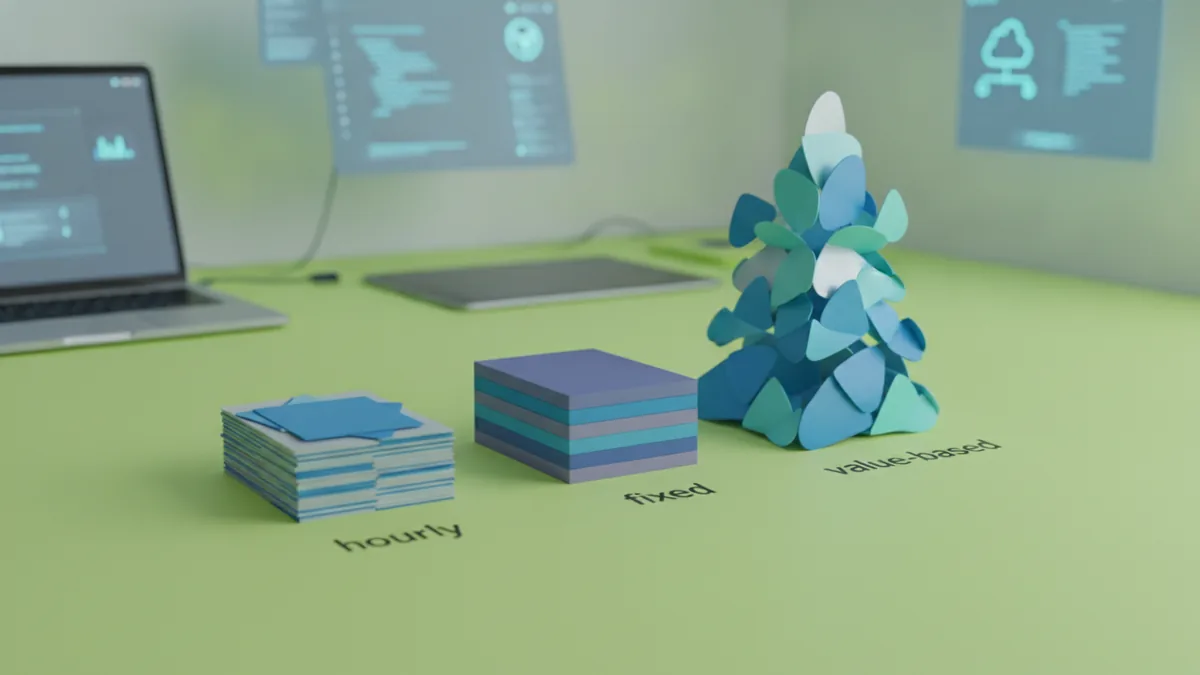
To answer “how do you price logo design services,” choose a pricing model that matches the uncertainty in the project. Hourly vs project pricing is the key split. Hourly pricing works when the client cannot define scope well. Project pricing works when you can define deliverables and a clear approval process.
Hourly pricing typically ranges from $50 to $150. It can protect you if the project expands after discovery. However, it can create friction because clients do not always understand why time increases. You must track time clearly and keep the scope tight.
Project-based pricing ranges more widely, often from $300 to over $10,000. This model is easier for clients to budget. It also helps you sell value, since you are pricing outcomes and deliverables, not minutes spent.
Value-based pricing is another option. If the logo significantly impacts the client’s business, you may charge higher. For example, a new brand identity for an app launch or a paid marketing campaign can justify higher rates because it may improve conversion or recognition.
| Pricing model | Best for | Typical range |
|---|---|---|
| Hourly | Unclear scope or early exploration | $50–$150/hour |
| Fixed project | Clear brief, defined deliverables | $300–$10,000+ |
| Value-based | High business impact | Often higher than cost-based |
How to gauge client needs before you quote
Pricing goes wrong when the designer guesses. Instead, treat your quote as the result of a brief. Establish the design brief to clarify expectations and justify pricing to clients. This is one of the most effective “how to price your logo design” steps you can take.
Start by asking what the logo must be used for. Will it be on a website header, an app icon, packaging, printed signs, or ads? Next, ask what “done” looks like for the client. Some clients want a single logo mark. Others want a full system with variations, lockups, and usage rules.
Also check how many rounds of feedback the client expects. Client expectations in design should include decision milestones. For instance, you can collect feedback after concept selection and again after refinement of the chosen direction.
- Collect context: brand story, competitors, and target audience
- Define scope: concepts, revisions, and deliverable types
- Set timeline: review windows and any rush needs
- Confirm budget: align scope with budget considerations for logo design
- Document approvals: what counts as “accepted” work
When you see scope creep signals, you can offer options. For example, offer a “single concept” tier and a “three concepts” tier. This keeps the quote fair without weakening your schedule.
Deliverables and revisions: make them explicit
Logo design deliverables and revisions are where transparency matters most. If clients assume unlimited revisions, they will be disappointed. If you define revisions clearly, both sides can move faster.
In your proposal, list the deliverables in plain language. Include the file types the client needs for real use. Many logos require at least vector files for long-term scaling. Clients may also need raster exports for quick web use.
Revisions and project scope should be tied to phases. A common approach is concept rounds plus a refinement round. You might offer one approval of direction, then revise the selected concept through a limited number of rounds. This prevents “restarting the project” during later reviews.
- Concept deliverables: usually multiple logo directions
- Refinement deliverables: typography tweaks, icon adjustments, and color options
- Output files: vector source and export formats for web and print
- Revisions: a fixed number of feedback rounds per phase
- Optional add-ons: brand guidelines or extra variations
Here is a practical way to price revisions without confusion. Price the base package with a defined revision count. Then set an hourly rate for additional rounds, or create an “extra revision bundle.” Clients understand that change has a cost.
Maximizing value and managing expectations
Good pricing is not only about covering your time. It is also about maximizing value. Use what you know about the client’s decision-making process. Then design your package to help them choose confidently.
Offering multiple concepts increases perceived value. It also reduces the chance that the client dislikes everything you produce. A typical structure is to show two to three directions, then refine one after selection. If your budget range is high, you can include more depth, like alternate typography or layout versions.
Also manage expectations with clear timelines. Tell clients when they will receive concepts and when they will give feedback. If the client delays feedback, your schedule slips. You can include review windows that start when assets are delivered, not when the client reads an email.
When you use value-based pricing, explain the business impact without sounding vague. For example, if the logo must function well in app icons and ads, emphasize usability and recognition. Show how the deliverables support those use cases. That makes “how to price a logo design” feel less arbitrary and more justified.
Finally, protect your rate with your process. A strong brief reduces rework. A clear revision policy reduces endless tweaks. When you keep the scope stable, your work becomes predictable and your prices stay consistent.
Conclusion and final thoughts
Pricing logo design services comes down to alignment. You match your quote to experience, complexity, and what the logo must deliver. Ranges vary widely for a reason. Simple marks for small businesses sit near the low end, while brand systems for major launches can reach very high totals.
If you want a simple starting point, decide which pricing model fits the project uncertainty. Then set your deliverables, concept count, and revision rounds in writing. Ask the right questions in your brief, so clients understand why a price makes sense.
Most importantly, be transparent. When you clearly define what the client gets, you reduce disputes and boost satisfaction. That is how you price a logo design with confidence, while building long-term client trust.
Frequently asked questions
- How do you price a logo design when the scope is unclear?
- Start with a short discovery and quote an hourly rate or a small fixed concept package. Then update the price once the brief defines deliverables and revision rounds.
- How to price a logo design for a small business budget?
- Offer a tiered package with fewer concepts and a limited revision count. Keep deliverables aligned to what they truly need for web and basic print.
- What is a typical hourly rate for a freelance logo designer?
- Many freelance designers charge about $50 to $150 per hour. Your final rate should reflect experience, speed, and how tight your process keeps revisions.
- Should I use hourly vs project pricing for logo design services?
- Use hourly when the work can expand and the client cannot define requirements yet. Use project pricing when you can document deliverables, phases, and approval checkpoints.
- How many revisions should be included in a logo design package?
- Include a defined number of revision rounds per phase, such as after concept selection and after refinement. Charge for additional rounds to avoid endless change requests.
- When is value-based pricing for a logo worth it?
- When the logo directly supports a launch, high-traffic marketing, or revenue-impacting channels. Explain the connection between deliverables and business outcomes.
Related reading
How to Make a Logo Online for Free: Tools, Tips, Downloads
Make a custom logo online for free. Learn tools, template edits, and smart export tips for web and print.
How to Build a Logo: Steps, Tools, and Testing
A practical guide to how to build a logo—steps, tools, and logo testing.
How to Create a Professional Logo for Free Online
Create a professional logo free online. Use templates, customize fonts and colors, then download high-res files.