How to Change an App Logo (Color, White, and Common Setups)

Why companies change their logo
Teams change logos for many real-world reasons. Sometimes the old mark no longer fits the product, the brand, or the audience. Other times the company updates its design system so every screen looks consistent.
Brand shifts can also drive logo changes. A new product line, a merger, or a refreshed tone of voice often calls for a cleaner symbol. Many companies also modernize logos for new platforms like mobile apps and app stores.
Finally, logo updates are often about usability. A logo that looked good on a white website may fail on dark screens. Teams may need a version that stays readable at small sizes.
- Match a new brand style across web and mobile
- Improve readability on dark and light UI
- Unify icons, spacing, and typography rules
- Fix poor contrast or low-res assets
How to change the logo of an app (the common paths)
When people ask how to change the logo of an app, they usually mean one of two things. They either want to swap the logo shown inside the app UI. Or they want to replace the icon published on an app store.
The fastest approach depends on how your app is built. Some apps read logo assets from a fixed folder or a branding setting. Others embed images in code or generate them from design tokens.
Before you start, find the “source of truth” for branding. Check your project files, your build pipeline, and your design system docs. Then plan all sizes and formats in one go so you do not redo work later.
- Identify where the app loads the logo asset
- Collect required formats for your UI and store icons
- Create versions for light, dark, and white backgrounds
- Replace assets and verify on real devices
- Rebuild and re-check every screen that uses the logo
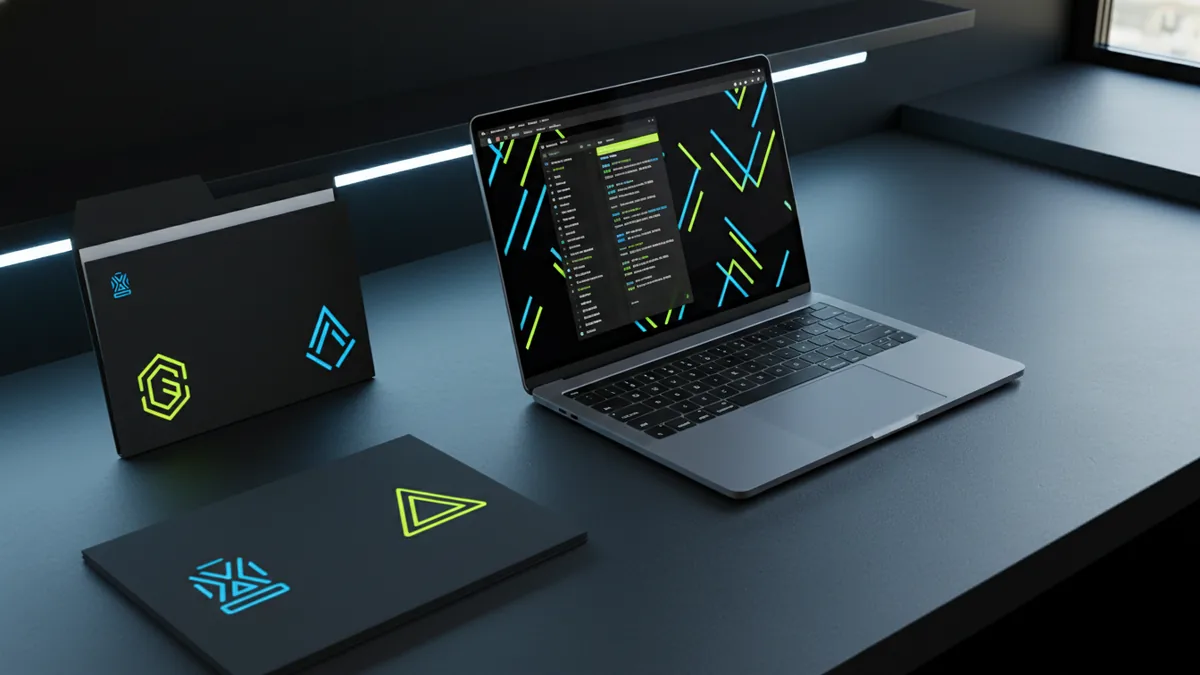
How to change app logo files (sizes, formats, and placement)
Most app logos ship as multiple sizes. You may need a large header logo and a small icon for navigation. You may also need square and rounded variants for different UI slots.
Start with your current logo set. Export or locate all existing assets in your repo, CMS, or design folder. Then map each old asset to a new replacement so nothing is missed.
If you are updating the logo itself, keep the geometry consistent. A “similar” icon can still break layouts if the padding differs. Aim for the same visual weight and safe area.
For square usage, prepare a square crop that stays clear at small sizes. If your logo includes text, test at tiny sizes. Text often becomes unreadable in app icon contexts.
| Use case | What to prepare | What to check |
|---|---|---|
| App header | Wide logo PNG or SVG | Spacing on high-density screens |
| Navigation icon | Small logo PNG | Legibility at 16–24px |
| Square slot | Square icon variant | Centered look without cutoffs |
| Dark theme | Inverted or tuned version | Contrast and edge clarity |

How to change logo color (including white logos)
People often search for how to change logo color online or how to change a logo to white. The safest method is to keep a vector master and export tuned variants. That way, you do not rely on one-off hacks that break later.
If your logo is in SVG, you can often adjust fill and stroke colors. If your logo is in PNG, you may need an editor that can recolor by hue or mask. Either way, test the result on both light and dark backgrounds.
For a white logo, focus on contrast, not just color. Thin lines can disappear if the white sits on a light overlay. Also check how the logo looks on gradients and semi-transparent headers.
- Make a light version for white UI
- Make a dark or colored version for dark UI
- Make a true white version for overlays
- Verify contrast with your real background screens
A practical workflow for color changes
Pick the background you will use most often. Then adjust the logo colors to match that context. Export a small set of variants and keep the originals untouched.
When you change colors, check for unintended artifacts. Edges may look jagged after export if the resolution changes. You also want the icon to keep the same balance of dark and light areas.
- Open the master logo file
- Set intended fills and strokes
- Export at the key sizes you need
- Test on real UI backgrounds, not plain white
How to change logo colors in common admin setups
Some teams want how to change logo in wordpress header or similar site settings. In many CMS setups, you upload a header logo in the theme customizer. Some themes also separate logo sizes for mobile and desktop.
If you use a WordPress theme with a header builder, you may also find color controls. Some themes recolor icons through CSS settings. Still, the header logo image usually comes from an upload field, not a color picker.
So the practical plan is simple. Upload the correct logo variant for the header. Then adjust any supporting icon colors using the theme options.
Checklist for WordPress header logo swaps
- Find the header logo upload control in the theme settings
- Upload the right aspect ratio to avoid stretching
- Replace the mobile logo if your theme uses one
- Check the sticky header and nav bar variants
- Test on mobile to confirm crisp rendering
Tips to avoid broken logos after you change them
Logo changes often break layouts in subtle ways. A new logo might be taller, wider, or heavier in visual weight. That can push UI elements out of alignment.
Also watch caching. When you change assets, users may still see the old logo. Build or deploy steps should invalidate caches for your app and web assets.
Finally, keep a version plan. If you change logo colors, store the previous set. That makes it easier to roll back if stakeholders dislike the new look.
| Problem | Likely cause | Fix |
|---|---|---|
| Logo looks blurry | Wrong file size for the slot | Export at the target size or use SVG |
| Logo is cut off | Padding or aspect ratio mismatch | Use the correct safe area and crop |
| Colors look washed out | Export profile or transparency issue | Re-export with consistent settings |
| Old logo still shows | Cache not refreshed | Rebuild and clear caches |
When to get design and build help
Logo work touches both design and engineering. If you only recolor a single PNG, you may still face unreadable results in dark mode. If your app uses multiple themes, you need a clear variant strategy.
It is also common to need UI updates beyond the logo file. Layout rules may need tweaks for header height or icon padding. This is where a web and app team can save time.
If you want a smooth update, plan the full set of assets. Then verify them on every screen that uses the branding. That is how you avoid last-minute surprises.
If you are building or upgrading a high-performance site or app, start with a free consultation. A full-service team can handle both the UI/UX work and the build steps.
Frequently asked questions
How to change app logo inside the app UI?
Find where your app loads branding assets, then swap the logo files used by headers and navigation. Replace all required sizes and verify on real devices.
How to change logo color online without ruining quality?
Use an editor that supports SVG or controlled recoloring. Export the new colors at the target sizes, then test on both light and dark backgrounds.
How to change a logo to white for dark mode?
Create a true white variant with tuned contrast, not just recoloring to pure white. Test it on your actual dark UI overlays to confirm readability.
How to change logo color in WordPress header?
Most themes use an upload field for the header logo, so you replace the logo image variant. If your theme has icon color settings, adjust those separately in theme options.
How to change a logo on square icon slots?
Prepare a square crop with correct safe area so it stays centered at small sizes. Export the square variant that matches each slot requirement.
How to change logo without breaking layouts?
Keep consistent padding and aspect ratio with the previous logo set. After the swap, check every screen that uses the logo, including sticky headers and mobile views.