How to Design a Sports Logo: Step-by-Step Guide
Learn how to design a sports logo—from concept and silhouettes to typography and testing—so your team identity works on uniforms and digital.
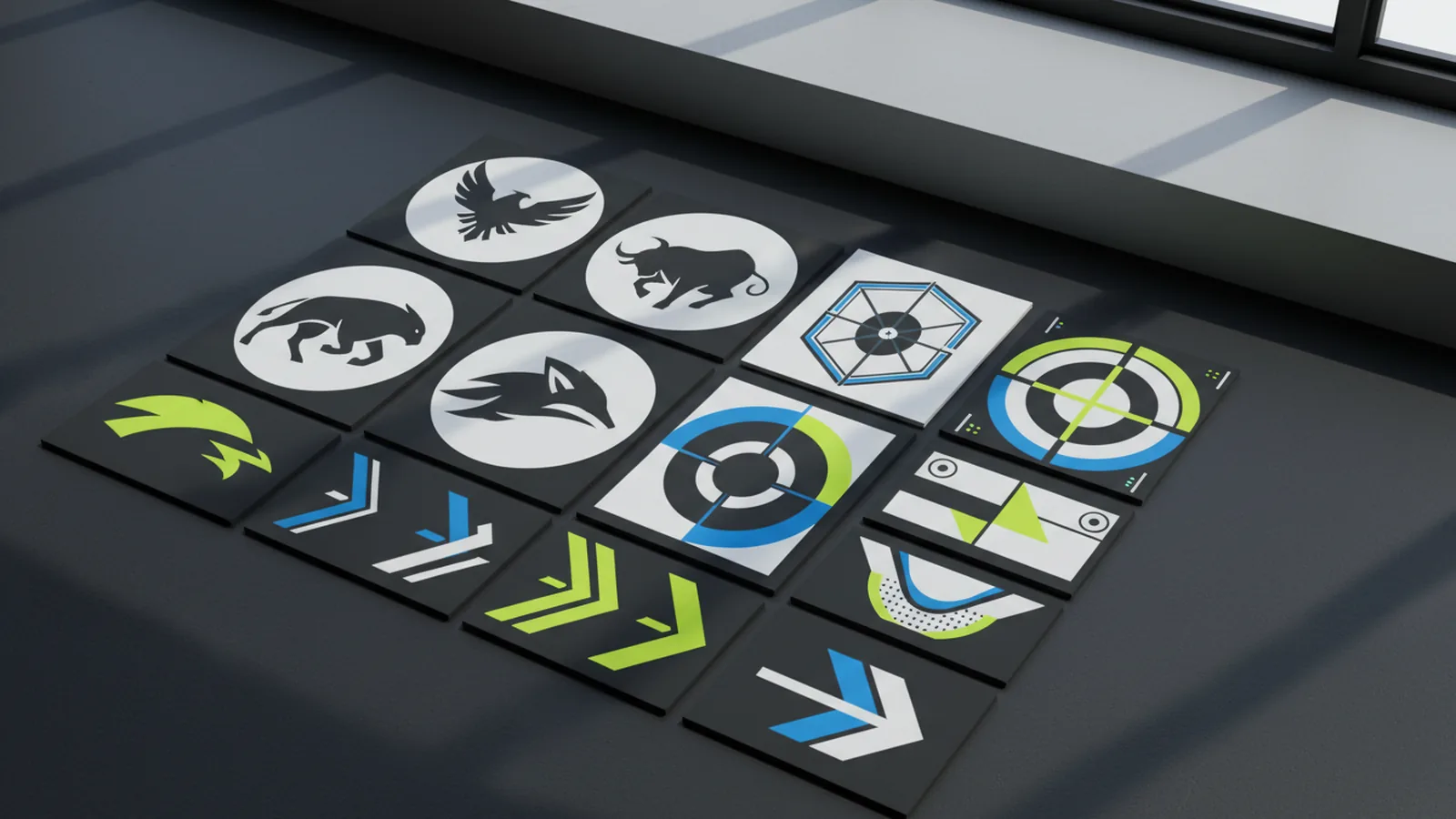
Start with the job your sports logo must do
A great sports logo is a brand system and visual shorthand. Fans should recognize it at a glance. It must look clear on a helmet, a jersey, or a small profile icon.
Before you design anything, list where the logo will live. A sports logo needs to work on uniforms, signs, social avatars, merch, and broadcast graphics. Design for one context only and you get a version that fails when it counts.
Also pick a personality: aggressive, playful, premium, or tradition-heavy. You don't need fancy brand terms. Your shapes, type, and color should all push the same emotional feel.
- Distance legibility: readable at a glance
- Scalability: looks clean from 48px to poster size
- Production readiness: workable for embroidery, print, and vinyl
- Consistency: same identity across digital and physical use
Research team identity and choose a visual direction
The most valuable design work happens before you open a vector tool. Gather references from similar leagues, local culture, and the team's own story. Look for patterns: animal shapes, shields, bold monograms, or line icons.
Next, list the must-haves: name style, mascot needs, club colors, and key symbols. Know what must be in before you start. This stops wasted rounds of work.
Finally, pick one clear direction per concept. A logo shouldn't try to be an illustration, a badge, and a social icon at once. One focused idea is the fastest path to a strong result.
- Collect references (10–30) and note recurring strengths
- Write down must-haves and "no thank you" elements
- Choose 1 dominant motif per concept (shield, monogram, mascot, emblem)
- Plan how the mark will look in single-color
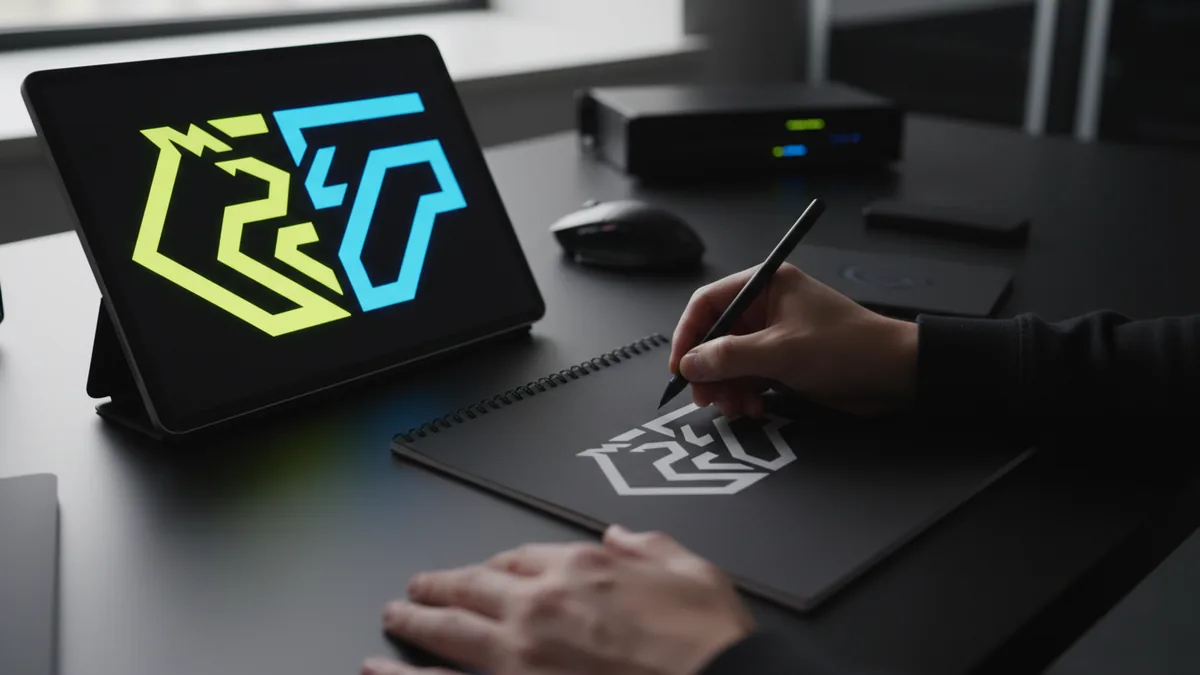
Build the mark: silhouette, geometry, and recognizable shapes
Design from the outside in. Start with a strong silhouette. It should be a shape fans can spot in a blink. Fans read forms and contrasts, not fine details.
Use geometry. Even a complex mascot should reduce to a few major shapes. Limit inner parts so strokes and gaps stay clear at small sizes.
For badge-style marks, keep sections readable. Too many compartments turn to clutter when printed small. For monograms, focus on rhythm: even stroke widths, careful spacing, and balanced letter gaps.
- Start with a simplified silhouette
- Limit stroke counts and tiny interior details
- Use negative space for clarity, not decoration
- Keep shapes consistent across variations
Typography that performs on jerseys and screens
Typography can make or break a sports logo. Letters must stay legible at a distance and in motion. Thin details and complex scripts can smear. Choose fonts based on function: boldness, clarity, and how well they hold at small sizes.
For team names on a badge, treat text as a design element. Arc it with intent and keep letter spacing even. Small letters should never turn to blobs. Use custom letter links in a monogram only when they help clarity. Not just to look cool.
Don't skip the supporting type system. Most teams need two text roles: the main name and a secondary item like city or year. Plan a clear order so the logo works across all formats.
| Logo usage | Typography guidance |
|---|---|
| Jersey chest / back | Bold, stable strokes; avoid ultra-thin lines |
| Social avatar (small) | Fewer characters; keep letter gaps open |
| Merch and stickers | Clear outlines; test with simpler versions |
| Broadcast graphics | High contrast; avoid dense micro-details |
Color strategy: contrast, limited palettes, and single-color versions
Color is where screen logos fail in production. Pick a primary and a secondary color with strong contrast. Subtle gradients and low-contrast tones struggle in embroidery and cheap print.
Build a limited palette and set rules for each color. Decide what happens when the background changes: dark-on-light, light-on-dark, or both. Backgrounds on signs, app icons, and merch can't always be controlled.
Design single-color and two-color versions from the start. A solid logo system needs at least three: full color, one-color dark, and one-color light. Test these early. You'll avoid last-minute redesigns when a print partner wants one more version.
- Choose a limited palette (primary + accent)
- Define background rules for dark and light contexts
- Create single-color variants for production
- Verify contrast at small sizes and on muted backgrounds
Refine with real-world testing and production constraints
Once the core is set, refine with constraints. Not opinions. A sports logo must work across screen print, vinyl, embroidery, decals, and digital overlays. Each method needs clear edges, fewer colors, and the right line weight.
Test your logo the way it will be used. Check it at tiny sizes, at distance, and in grayscale. If any part disappears or turns to noise, reduce detail or boost contrast through shape changes.
Finally, structure your logo as a reusable system. Provide versions for: horizontal and stacked layouts, badge and icon crops, and safe spacing guidelines. That's when a logo is truly designed. Not just drawn.
- Size test: readable at small dimensions
- Greyscale test: identity survives without color
- Embroidery/print test mindset: fewer details, clearer shapes
- Layout variants: horizontal, stacked, and icon crops
Common mistakes when designing a sports team logo
Even great designers slip up. The biggest trap is too much detail. If the logo only works large, it fails on uniforms, helmets, and social tiles. Fans see it for milliseconds.
Another common issue is a weak silhouette. A logo may look great in full color. But stripped to one color, it loses its identity. Check the one-color block version early. Keep working until the shape reads on its own.
Many teams use one file for everything. Don't do that. Print partners need specific formats and clean assets. Digital teams need fast, vector-ready marks. Build the system once. Everyone will thank you.
| Mistake | What to do instead |
|---|---|
| Too many small elements | Cut to major shapes and bolder empty space |
| Low contrast palette | Choose high-contrast colors; test on light and dark backgrounds |
| Typography that collapses at small sizes | Use bold letters; cut character density |
| No single-color variants | Design full color plus 1–2 print-ready single-color versions |
| One layout for every use | Make side-by-side, stacked, and icon crops with safe spacing |
Deliverables checklist for a complete sports logo system
To make your logo useful past the first pitch, prepare a package your team can use. Provide vector source files. They scale without quality loss. Add ready-to-use versions for print and digital.
A good logo system cuts back-and-forth and speeds up launch. It keeps things consistent when vendors handle uniforms, signs, and promo items. Treat your logo like a product. Docs and versions matter.
- Vector source file(s) for the main mark
- Full-color, one-color dark, and one-color light versions
- Horizontal and stacked layouts
- Icon/crop version for avatars and small placements
- Minimum safe-space guidance (based on your layout)
Building a digital presence too? Align your logo system with your UI needs. The avatar version should read clearly against your site backgrounds. Make sure color rules match your web brand palette.
Frequently asked questions
- What makes a sports logo look professional and recognizable?
- A professional sports logo has a clear silhouette, strong contrast, and simplified shapes that stay readable at small sizes. It should also include consistent typography and production-friendly variants.
- How do I design a sports team logo that works on uniforms?
- Design for legibility first: fewer details, controlled line weights, and high-contrast color choices. Provide single-color and simplified versions so prints and embroidery don’t lose the identity.
- Should I start with a mascot or a badge shape?
- Either can work, but start with the element that creates the best silhouette. For many teams, a badge shape or strong monogram reads fastest, while mascots become effective once simplified into major shapes.
- How many colors should a sports logo use?
- Most teams benefit from a limited palette that can be reproduced reliably. Aim for a primary plus an accent, and always create monochrome versions for production and low-color contexts.
- What’s the biggest mistake when learning how to design a sports logo?
- Over-detailing is the most common issue—elements that look good in a large mockup disappear when scaled down or printed small. Test early at tiny sizes and in grayscale to catch it.
- What deliverables should I request or provide for a complete logo package?
- Provide vector source files, full-color and one-color variants, and multiple layouts (horizontal, stacked, icon crop). Safe spacing guidance and consistent versioning help teams use the logo correctly across channels.
Related reading
How to Copyright a Logo (and When to Trademark It)
Steps to copyright a logo, costs, and how trademark changes protection.

Logo Sizes Guide: Optimal Dimensions for Web, Print, and More
Use the right logo size for every place it appears—web, print, and social—without losing brand consistency.
How to Make a Spinning Logo: Tools, Tips, and Exports
Make a spinning logo with After Effects or online tools, then export MP4 or GIF.