How Many NFL Teams Have Blue in Their Logo?
See how many NFL teams feature blue in their logos, how that compares with red and star elements, and why colors matter for team identity.
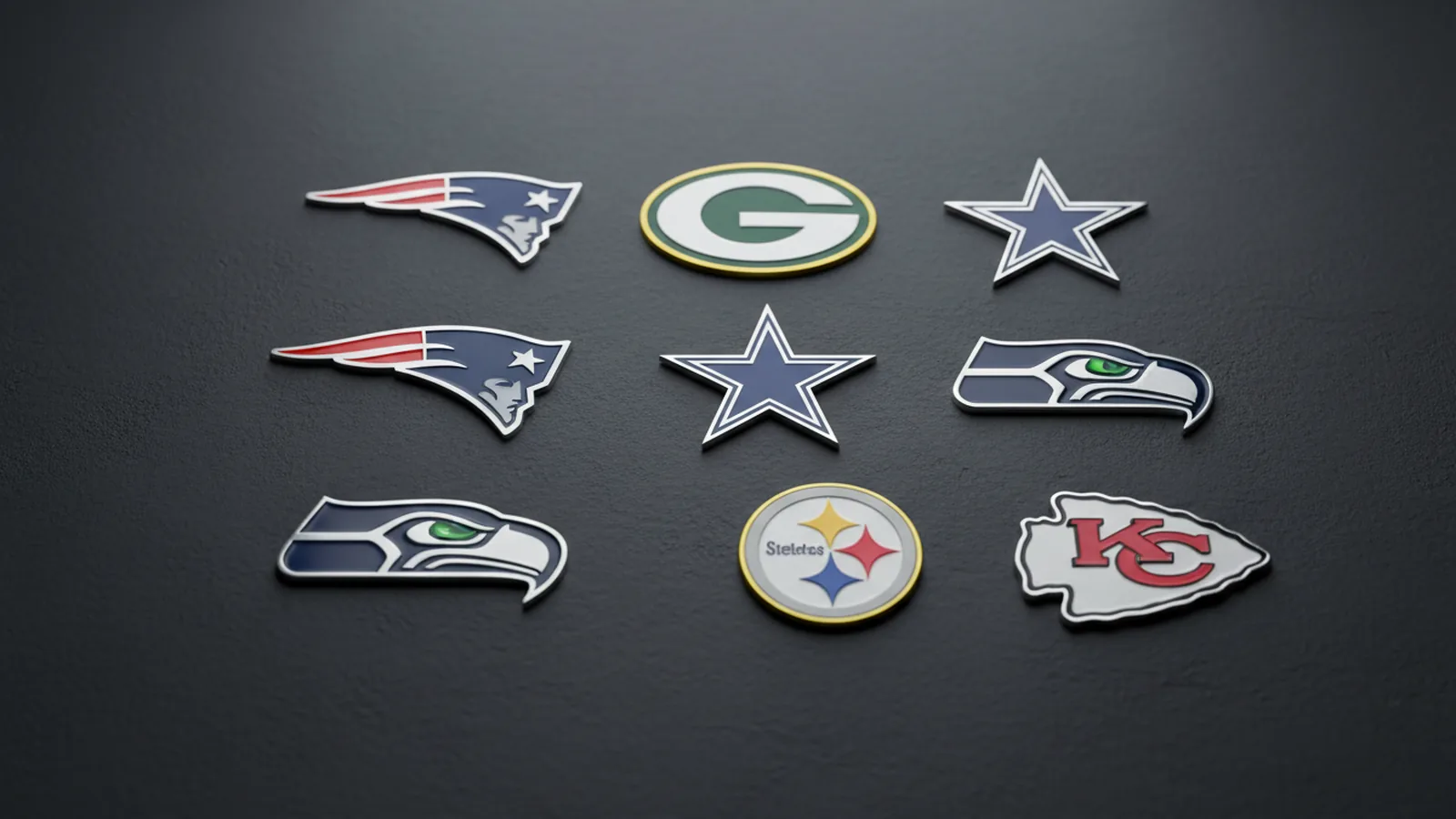
Introduction to NFL Team Logos
If you’re wondering how many NFL teams have blue in their logo, the direct answer is: 19 of the 32 teams use blue (including navy, royal, and similar shades) in at least one prominent logo element. That count gives you a workable baseline for comparing color choices across the league and spotting design patterns tied to brand recognition.
NFL logos aren’t just “team names with shapes.” They’re a compact system of identity - team color palettes, symbolism, and visual balance - intended to stay recognizable on jerseys, hats, stadium signage, and broadcast graphics. When a color appears repeatedly across the league, it often reflects what fans associate with the team’s personality: tradition, strength, speed, trust, or regional ties.
For this overview, we’re focusing on the team’s primary official logo marks (the league-standard logo that’s used for branding in common applications). If a team has multiple versions over time, this discussion counts colors that appear in the currently used primary branding mark.
Overview of Teams with Blue in Their Logos
Across today’s league, 19 NFL teams feature blue in their logos. The important nuance is that “blue” rarely means a single shade. Teams frequently distinguish between navy (often used for contrast and a more classic look) and royal or brighter blues (often used to signal energy and clarity in high-visibility contexts).
Below is a practical list of teams with prominent blue elements in their logo design. (Some logos incorporate multiple colors, but blue is clearly present in the mark.)
- Atlanta Falcons
- Baltimore Ravens
- Buffalo Bills
- Carolina Panthers
- Chicago Bears
- Cleveland Browns (blue used sparingly in some logo versions; commonly present in branding)
- Dallas Cowboys
- Detroit Lions
- Green Bay Packers
- Houston Texans
- Indianapolis Colts
- Jacksonville Jaguars
- Kansas City Chiefs
- Los Angeles Chargers
- Miami Dolphins
- Minnesota Vikings
- New England Patriots
- New York Giants
- New York Jets
Note: A few teams can be borderline depending on what you treat as “blue” versus “steel,” “teal,” or “gray-blue.” That’s why you’ll often see different tallies from different sources. The key is consistency: count blue when it’s a distinct, visible part of the primary logo’s color system.
What’s equally useful for comparison is that these blue-inclusive logos span different design approaches - wordmarks, crests, helmets, and animal or emblem shapes. That means the presence of blue isn’t tied to one logo style; it’s a broader NFL branding choice.
Comparison with Other Colors
To compare color usage, we can set blue against red - because red tends to read as high-energy and attention-grabbing on the field and on screen. For the league, the count is: 17 of the 32 teams feature red in their logos. Like blue, red also appears in multiple intensities (bright crimson, darker maroon, and variations paired with gold or black).
At a high level, you can think of the league’s palette as a balance between “statement colors” (like red) and “anchoring colors” (like blue). In broadcast settings, red often pops strongly against dark backgrounds, while blue frequently works well with white for crisp edges and readability.
If you want a quick sense of how these colors align with other common logo motifs, it helps to look at design elements in sports beyond color - especially star marks.
| Color / Element | How many NFL teams | What it usually signals visually |
|---|---|---|
| Blue in logo | 19 | Trust, depth, tradition; often paired with white for clarity |
| Red in logo | 17 | Energy, aggression, urgency; often used with gold/black contrast |
| Stars in logo | 7 | Honor, excellence, “aspiration” symbolism; also regional cues |
Those star counts are particularly relevant if you’re comparing NFL identity systems that go beyond color. Stars also appear alongside bold shapes, stripes, and eagle or helmet motifs - so the overall impression can feel more “official” or ceremonial.
For fans who like team-by-team comparison, it can also help to understand that logos evolve. Historical changes in NFL logos have repeatedly adjusted color brightness and contrast to improve legibility in new broadcast and merchandising contexts.
Teams with star elements in their logos
Here are the teams most commonly recognized as using star elements in their primary logo design - supporting the how many NFL teams have a star in their logo comparison.
- Dallas Cowboys
- Houston Texans
- Green Bay Packers
- Indianapolis Colts
- Kansas City Chiefs
- New York Jets
- Arizona Cardinals
Star presence often clusters with specific visual themes: serif-style branding, bold emblems, and badge-like crests. That’s one reason star logos can feel instantly “NFL-like” when you’re scanning highlights or game-day graphics.
Red and blue together: what to look for
When you compare NFL logo colors across teams, notice how red teams frequently pair red with yellow/gold or black to create sharp separation. Blue teams often rely on white to keep edges clean, especially in logos built around outlines, wordmarks, or animal/mascot silhouettes.
Shade matters too. Navy (a deeper blue) tends to behave like a neutral in design - so it pairs cleanly with red, orange, and black. Bright blue (royal/azure) reads more energetic, which can influence how a logo “feels” at a glance even if the team’s brand personality isn’t explicitly described.
Notable Blue Logo Designs
Blue becomes most interesting when you compare how each team uses it as part of a larger design system. For example, some teams treat blue as a primary field color inside a crest, while others use blue as an accent that outlines a helmet, wing, or animal shape. Both approaches can still score high on recognition because the overall silhouette remains consistent.
Here are a few notable patterns you’ll see in teams featuring blue. These aren’t “best logos” rankings - they’re design lessons you can use to interpret what you’re seeing on a screen.
- Navy-first crests: Blue appears as a deep, dominant base with high-contrast borders. This often helps logos look stable across dark jerseys and broadcast overlays.
- Royal-blue accents: Brighter blues are used to emphasize movement - wings, rays, or stylized lettering - and to create visual “momentum.”
- Blue in emblem lines: Some teams rely on thin strokes of blue to define structure (stripes, framing shapes, or helmet graphics), improving recognizability at small sizes.
- Blue paired with gold or orange: When blue is teamed with warm tones, the logo can feel more dynamic and modern, especially for teams whose branding leans futuristic or high-contrast.
If your goal is to compare “teams with blue logos in NFL” versus another subset, pay attention to whether blue is used for mass coverage (bigger areas) or for linework (thin highlights). Linework can make a blue accent feel stronger than its area suggests - especially on merchandise where colors are simplified.
Also note the interplay between blue and other design elements, like stars. Star shapes tend to add sharp geometry, while blues often provide the depth that makes the star feel more dimensional or “official.” That combination can amplify brand recognition.
Significance of Color in Branding
In sports branding, colors do more than decorate. They drive brand recognition, support team identity across merchandise, and influence how fans read a team’s character at a distance. This is why you’ll see stable palettes repeated across seasons: changing too many colors at once can make a team harder to recognize in the middle of a fast-moving broadcast.
Color psychology in sports is often discussed, and while it’s not a strict science, consistent color usage helps build mental associations. Blue commonly gets associated with reliability and composure, while red is frequently tied to intensity and urgency. Combined with symbols like stars, eagles, or helmets, the color palette becomes part of a larger narrative fans can repeat.
Finally, historical changes in NFL logos regarding colors matter when you compare counts. Many teams have updated their palette over time - tweaking shade, saturation, or contrast - usually to improve legibility in modern media. That’s also why older versions might suggest a different “blue in the logo” or “red in the logo” count if you look only at legacy branding.
If you’re building a comparison project - say, a simple spreadsheet of teams with blue logos in NFL alongside teams with red and star marks - make sure your methodology stays consistent. Count the primary current logo mark, then track exceptions as “version-dependent” rather than mixing old and new designs.
Quick methodology for your own comparisons
- Choose one source for the current primary logo (team official branding page or the league’s standard set).
- Count a color if it appears as a distinct, visible part of the primary mark (not just a gray that could be interpreted as blue).
- For stars, count them as star shapes used as a significant element in the mark, not tiny decorative specks.
- When a team has multiple versions, document which version you counted and stick to it.
Following those steps keeps your comparison clean - and makes it easier to explain why your results might differ from someone else’s “logo color count.”
FAQ: Blue, Red, Stars, and Common Logo Motifs
Below are the most common follow-up questions people ask when comparing league-wide logo colors and elements.
- How many nfl teams have blue in their logo? 19 of 32 teams.
- How many nfl teams have red in their logo? 17 of 32 teams.
- How many nfl teams have a star in their logo? 7 of 32 teams.
If you’re also comparing across leagues, you can broaden the same approach to other sports - but keep the counting rules consistent so the comparison stays meaningful.
Frequently asked questions
- How many NFL teams have blue in their logo?
- Nineteen of the 32 NFL teams feature blue in their primary logo marks.
- How many NFL teams have red in their logo?
- Seventeen of the 32 teams feature red in their primary logo marks.
- How many NFL teams have a star in their logo?
- Seven teams use star elements as a notable part of their primary logo design.
- Do NFL teams use different shades of blue?
- Yes. Many teams differentiate between navy and brighter royal/azure blues, which helps readability and brand feel across jerseys and broadcasts.
- Why does color matter so much in sports branding?
- Consistent colors improve instant recognition across merchandise, broadcasts, and stadium graphics, reinforcing team identity for fans.
- Have NFL logo colors changed over time?
- Yes. Historical changes often involve adjusting shades, contrast, and legibility for new media and merchandising formats, which can affect color counts if you compare older logo versions.
Related reading

How to Copyright a Logo (and When to Trademark It)
Steps to copyright a logo, costs, and how trademark changes protection.

Logo Sizes Guide: Optimal Dimensions for Web, Print, and More
Use the right logo size for every place it appears—web, print, and social—without losing brand consistency.

How to Make a Spinning Logo: Tools, Tips, and Exports
Make a spinning logo with After Effects or online tools, then export MP4 or GIF.